Apple iPad Pro 11 M4 (2024) Price in Kenya — KSh 136,000 | Fast Gadgets Kenya
The Fast Gadgets Verdict
Apple iPad Pro 11-inch M4 (2024) Price in Kenya is KSh 136,000. The Apple iPad Pro 11-inch M4 is not competing with other tablets at KSh 136,000. It is competing with laptops. The M4 chip inside it is faster than the processors in most Windows laptops sold in Kenya today, the Tandem OLED display is the best screen ever put in a tablet from any manufacturer, and at 5.3mm it is the thinnest Apple product ever made. If you need a tablet for serious professional or creative work — video editing, music production, 3D design, illustration, or high-stakes productivity — nothing else in the tablet market approaches what this device offers.
The honest limitations: the price of KSh 136,000 is for the base 256GB Wi-Fi variant only. The Magic Keyboard and Apple Pencil Pro that make this device complete as a laptop replacement cost an additional KSh 30,000–50,000 combined. Most users will never fully utilise the M4’s performance headroom. And iPadOS, despite significant improvements, still imposes limits on file management and app flexibility that macOS does not.
Our rating — 10/10 for hardware achievement. 8/10 for value relative to total cost of ownership with accessories.
Right for You?
If you edit 4K or ProRes video professionally, create digital art and illustration for commercial clients, produce music with demanding software, or need a device that functions as both a premium tablet and a credible laptop replacement without carrying two devices — the iPad Pro 11 M4 is the correct tool and the price is justified by the hardware it delivers. If you are a student, a casual user, or someone whose heaviest tablet use is streaming, note-taking, and browsing, the iPad Air M2 or iPad Mini 7 serve those needs at KSh 40,000–60,000 less. The iPad Pro 11 M4 is the right answer for a specific buyer who will actually use what it offers — and for that buyer, nothing else comes close.
Apple iPad Pro 11-inch M4 Full Specifications
Launch
| Feature | Specification |
|---|---|
| Announced | 2024, May 7 |
| Released | 2024, May 15 |
| Status | Available in Kenya |
Body
| Feature | Specification |
|---|---|
| Dimensions | 249.7 x 177.5 x 5.3 mm |
| Weight | 444g (Wi-Fi) / 446g (5G) |
| Build | Glass front, aluminium back, aluminium frame |
| Thickness Note | Thinnest Apple product ever made |
| SIM | eSIM (cellular model only) |
| Stylus | Apple Pencil Pro, Apple Pencil 2nd generation |
Display
| Feature | Specification |
|---|---|
| Type | Ultra Retina XDR Tandem OLED |
| Size | 11.0 inches |
| Resolution | 1668 x 2420 pixels, 264 ppi |
| Refresh Rate | 10Hz–120Hz ProMotion adaptive |
| Brightness | 1000 nits SDR, 1000 nits HBM full screen, 1600 nits peak HDR |
| HDR Support | HDR10, Dolby Vision |
| Colour | Wide colour P3, True Tone |
| Protection | Scratch-resistant glass, oleophobic coating, anti-reflective coating |
| Premium Option | Nano-texture display glass on 1TB and 2TB models |
Platform
| Feature | Specification |
|---|---|
| Operating System | iPadOS 17.5 at launch, upgradeable to iPadOS 26.4 |
| Chipset | Apple M4 |
| CPU — 256GB and 512GB | 9-core (3 performance + 6 efficiency cores) |
| CPU — 1TB and 2TB | 10-core (4 performance + 6 efficiency cores) |
| GPU | Apple GPU, 10-core graphics |
| Neural Engine | 16-core |
| Special Feature | Hardware-accelerated ray tracing |
Memory and Storage
| Feature | Specification |
|---|---|
| RAM — 256GB and 512GB | 8GB |
| RAM — 1TB and 2TB | 16GB |
| Storage Options | 256GB / 512GB / 1TB / 2TB |
| Card Slot | Not supported |
Main Camera
| Feature | Specification |
|---|---|
| Rear Camera | 12MP, f/1.8, dual pixel PDAF |
| Depth | TOF 3D LiDAR scanner |
| Video | 4K@24/25/30/60fps, 1080p@25/30/60/120/240fps, gyro-EIS, ProRes, Cinematic mode |
| Features | Quad-LED dual-tone flash, HDR |
Front Camera
| Feature | Specification |
|---|---|
| Front Camera | 12MP, f/2.4, 122° ultrawide, landscape orientation |
| Video | 1080p@25/30/60fps, gyro-EIS, HDR |
| Features | Centre Stage auto-framing, Face ID biometrics, face detection |
Audio
| Feature | Specification |
|---|---|
| Loudspeaker | Yes, four-speaker stereo array |
| 3.5mm Jack | No |
Connectivity
| Feature | Specification |
|---|---|
| Wi-Fi | 802.11 a/b/g/n/ac/6e, dual-band, hotspot |
| Bluetooth | 5.3, A2DP, LE, EDR |
| GPS | Cellular model only — GPS, GLONASS, GALILEO, QZSS |
| NFC | No |
| Radio | No |
| USB | USB Type-C 4, Thunderbolt 3, DisplayPort, magnetic connector |
Sensors and Security
| Feature | Specification |
|---|---|
| Face Unlock and Biometrics | Face ID — 3D facial recognition |
| Sensors | Accelerometer, gyro, compass, barometer |
Battery
| Feature | Specification |
|---|---|
| Capacity | 8,160mAh (31.29Wh) |
| Charging | USB-C wired |
| Apple Claim | Up to 10 hours typical use |
Colors
| Feature | Specification |
|---|---|
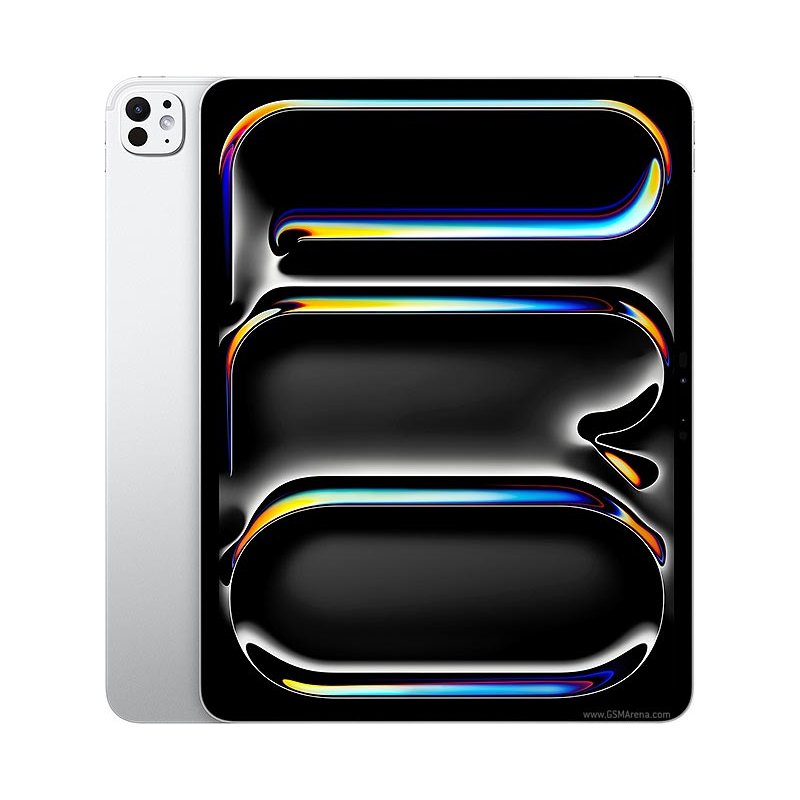
| Available Colors | Silver, Space Black |
Price in Kenya
| Variant | Price |
|---|---|
| 256GB Wi-Fi | KSh 136,000 |
Apple iPad Pro 11 M4: The Display in Real Life
The Tandem OLED display on the iPad Pro 11 M4 is the single most significant display advancement in tablet history and it deserves explanation beyond the specification numbers. Tandem OLED stacks two OLED panels on top of each other, which doubles the light output compared to a standard OLED while maintaining OLED’s perfect blacks and infinite contrast. The result is a display that delivers 1,600 nits of peak brightness for HDR content — bright enough to make specular highlights in video look genuinely luminous — while simultaneously showing true black in the same frame where other panels show dark grey.
In practical daily use this means several things that matter in Kenya specifically. Outdoor use is significantly more comfortable than standard tablets — 1,000 nit full-screen brightness means the display competes with ambient light rather than being overwhelmed by it. HDR video from Netflix, Apple TV+, and YouTube in Dolby Vision or HDR10 format plays back with a visual richness that no LCD tablet regardless of price can match. Photo and video editing work happens on a display that shows accurate colours, genuine shadows, and proper highlights — the creative professional gets to see the actual result of their work rather than an approximation of it.
The ProMotion 10Hz–120Hz adaptive refresh rate ensures the display is always running at the appropriate rate — 10Hz when reading a static page to preserve battery, 120Hz when scrolling, playing games, or using Apple Pencil to minimise latency. Apple Pencil latency on this display is imperceptible — the line appears to emerge from the tip of the pencil rather than trailing behind it, which makes illustration and handwriting feel natural rather than digital.
The anti-reflective coating on all models and the nano-texture glass option on the 1TB and 2TB variants address the one traditional OLED weakness — reflectivity. The nano-texture glass diffuses reflections at the surface without compromising colour accuracy, making the display usable in environments with strong overhead lighting that would render a standard glossy tablet surface unusable for professional work.
What the Cameras Actually Do
The 12MP rear camera with LiDAR scanner serves professional use cases that go beyond standard tablet photography. LiDAR enables instant augmented reality experiences — measuring physical spaces accurately, overlaying 3D objects on real environments for architecture and design visualisation, and enabling AR apps to place virtual objects convincingly in the real world. For architects, interior designers, and engineers using AR-enabled professional apps, the LiDAR scanner is a practical tool rather than a novelty.
ProRes video recording is the headline camera capability for creative professionals. ProRes is a professional video format used in broadcast and film production — it captures significantly more colour and dynamic range information than standard H.264 or HEVC video, giving video editors substantially more latitude for colour correction and visual effects in post-production. Recording ProRes 4K directly to a tablet that also edits the footage on the same M4 chip creates a self-contained professional production workflow that previously required multiple dedicated devices.
Cinematic mode brings shallow depth of field video — the cinematic look where the subject is sharp and the background softens — to the iPad Pro’s camera with AI-driven focus transitions that mimic the rack focus technique professional cinematographers use. For content creators, marketers, and educators producing professional-quality video, Cinematic mode delivers results that previously required dedicated cinema cameras.
The landscape-oriented 12MP front camera is a deliberate design decision with a practical payoff. Most tablets position the front camera on the short edge, which means it sits on the side when the tablet is held in landscape orientation — the natural position for video calls and collaborative work. The iPad Pro 11 M4’s front camera sits on the long edge, which means it faces you directly during landscape-orientation video calls, producing more natural eye contact and a more professional framing. Centre Stage tracks you automatically as you move, keeping you centred without manual adjustment.
Apple iPad Pro 11 M4: How the M4 Chip Performs
The Apple M4 on 3nm is not a scaled-up phone chip. It is the same chip Apple designed for its professional Mac computers, and its performance in a 5.3mm tablet body is genuinely extraordinary by any standard of comparison. Single-core CPU performance on the M4 exceeds every Intel and AMD laptop processor in most Windows laptops sold in Kenya at comparable or significantly higher prices. The 10-core GPU on all variants handles 3D rendering, ProRes video transcoding, and graphically intensive applications at speeds that professional workstations delivered just a few years ago.
The 16-core Neural Engine handles on-device machine learning — powering Apple Intelligence features, computational photography processing, real-time audio analysis in GarageBand and Logic Pro for iPad, and any AI-driven feature across the system — without sending data to a server and without slowing down when processing intensive tasks simultaneously.
The practical meaning of this performance for professional users is that the limitations on what the iPad Pro 11 M4 can accomplish are no longer hardware constraints — they are software and workflow constraints. Final Cut Pro for iPad edits multicam 4K ProRes footage in real time. Logic Pro for iPad handles complex sessions with dozens of tracks, software instruments, and processing plugins without latency. Procreate runs massive canvas sizes with hundreds of layers at full resolution without slowdown. The question is not whether the M4 can handle your professional workflow — it can. The question is whether iPadOS supports the specific workflow you need.
The RAM difference between storage tiers matters for professional use: the 256GB and 512GB variants carry 8GB RAM — sufficient for most creative work — while the 1TB and 2TB variants have 16GB RAM, which benefits the most demanding multi-app professional workflows involving large video files, complex audio sessions, or simultaneous high-resolution editing.
Battery Life and Connectivity
The 8,160mAh battery delivers Apple’s claimed 10 hours of typical use consistently across professional workloads. For a chip as powerful as the M4, this efficiency is itself a remarkable engineering achievement — the 3nm process allows the M4 to deliver desktop-class performance while drawing power at levels that a battery this size can sustain for a full working day.
The Thunderbolt 3 USB-C port is the connectivity story that separates the iPad Pro from every other iPad. Thunderbolt 3 supports up to 40Gbps data transfer — fast enough to work directly with high-resolution video files from an external SSD without waiting for transfers. It supports external 4K and 5K displays at full resolution through a single cable, turning the iPad Pro into a desktop workstation when connected to a monitor. It supports the Magic Keyboard’s trackpad and charging pass-through. It supports audio interfaces, drawing tablets, and professional peripherals directly without adapters in most cases.
The four-speaker stereo array delivers spatial audio that is genuinely impressive for a tablet — the speakers position above and below the screen in both portrait and landscape orientations, maintaining stereo separation regardless of how you hold the device, and the four-speaker setup produces enough volume and bass extension that external speakers are optional rather than necessary for most use scenarios.
Apple iPad Pro 11 M4 vs iPad Air M2 — Do You Actually Need Pro?
| Feature | iPad Pro 11 M4 | iPad Air M2 (2024) |
|---|---|---|
| Price in Kenya | From KSh 136,000 | From KSh 95,000 |
| Chip | Apple M4 | Apple M2 |
| Display | 11″ Tandem OLED, 120Hz ProMotion | 11″ Liquid Retina LCD, 60Hz |
| Peak Brightness | 1600 nits (HDR) | 500 nits |
| Face ID | Yes | No — Touch ID side button |
| LiDAR Scanner | Yes | No |
| ProRes Video | Yes | No |
| Thunderbolt | Yes — Thunderbolt 3 | No — USB-C 3.1 |
| RAM | 8GB / 16GB | 8GB |
| Storage | Up to 2TB | Up to 1TB |
| Speakers | Four speakers | Two speakers |
| Apple Pencil | Pencil Pro / Pencil 2 | Pencil Pro / Pencil 2 |
| Nano-texture Glass | 1TB+ models | No |
Our pick: The iPad Air M2 at KSh 95,000 is the right choice for the majority of buyers — students, professionals doing standard productivity work, content consumers, and casual creators. The M2 handles everything most people actually do with a tablet smoothly, the LCD display is sharp and accurate, and the KSh 41,000 saving is significant. The iPad Pro 11 M4 justifies its premium specifically for three buyer profiles: professional video editors who need ProRes recording and Thunderbolt 3 transfer speeds, illustrators and designers who will notice and use the OLED display’s superior contrast for colour-accurate creative work, and developers or professionals who need the most powerful available hardware for demanding iPadOS apps. If you are not clearly in one of those three profiles, the iPad Air M2 is the smarter financial decision.
Buy It If / Skip It If
| Buy it if | Skip it if |
|---|---|
| You edit ProRes 4K video professionally | You primarily stream, browse, and take notes |
| The Tandem OLED display quality matters for your creative work | The iPad Air M2 covers your actual use cases at KSh 41,000 less |
| Thunderbolt 3 connectivity to external drives and displays is needed | You want more colour options — only Silver and Space Black available |
| LiDAR for AR professional applications is relevant to your work | The total cost including accessories exceeds your budget |
| You want the absolute best hardware Apple makes in tablet form | You are a casual user who will not use M4’s performance headroom |
Questions Kenyans Are Asking About the Apple iPad Pro 11-inch M4
What is the Apple iPad Pro 11 M4 price in Kenya? The Apple iPad Pro 11-inch M4 price in Kenya starts at KSh 136,000 for the 256GB Wi-Fi variant at Fast Gadgets Kenya.
Je, iPad Pro 11 M4 inafaa kwa wanafunzi Kenya? Inategemea matumizi yako. Kwa wanafunzi wa kawaida wanaohitaji kuchora maelezo, kusoma, na kutazama video — iPad Air M2 au iPad Mini 7 ni chaguo bora kwa bei nafuu zaidi. iPad Pro 11 M4 inafaa zaidi kwa wanafunzi wa ubunifu — uhariri wa video, usanifu, na muziki — ambao wanaweza kutumia nguvu za M4 kikamilifu.
What is the difference between the 256GB and 1TB iPad Pro 11 M4? Beyond storage capacity, the 1TB and 2TB models include a 10-core CPU, adding one extra performance core over the 9-core in the 256GB and 512GB variants, and 16GB RAM instead of 8GB. They also qualify for the nano-texture glass display option. For demanding professional workflows the 1TB’s extra RAM and CPU core make a meaningful difference. For standard use the 256GB or 512GB variants are sufficient.
Does the iPad Pro 11 M4 support Apple Pencil? Yes. The iPad Pro 11 M4 is compatible with both the Apple Pencil Pro and the Apple Pencil 2nd generation. The Apple Pencil Pro adds squeeze gesture, barrel roll detection, and haptic feedback for a more expressive creative experience. Both pencils attach magnetically to the side of the iPad and charge wirelessly.
Is the iPad Pro 11 M4 display actually OLED? Yes. The iPad Pro 11 M4 uses a Tandem OLED display — two OLED layers stacked to double brightness output while maintaining perfect blacks. It supports Dolby Vision and HDR10. It has one of the best HDR displays available on any tablet.
Bei ya iPad Pro 11 M4 Kenya ni ngapi? Bei ya iPad Pro 11 M4 Kenya inaanzia KSh 136,000 kwa variant ya 256GB Wi-Fi kutoka Fast Gadgets Kenya. Variants za storage zaidi na model ya Cellular zinapatikana kwa bei tofauti — thibitisha moja kwa moja na Fast Gadgets Kenya.
How long will Apple support the iPad Pro 11 M4? Apple launched this iPad on iPadOS 17 and it has already been updated to iPadOS 26. Apple typically supports iPad Pro models for seven to eight years of major updates, meaning the iPad Pro 11 M4 is likely to receive iPadOS updates until approximately 2031–2032.
Can the iPad Pro 11 M4 replace a laptop in Kenya? For many professional workflows — video editing in Final Cut Pro, music production in Logic Pro, illustration in Procreate, document work in Pages and Numbers — yes, especially when paired with the Magic Keyboard. For workflows requiring specific desktop software, extensive file management, or development environments, a Mac remains more practical. The iPad Pro 11 M4 is the most capable laptop replacement a tablet has ever offered, but iPadOS limitations still apply.
Where can I buy the Apple iPad Pro 11-inch M4 in Kenya? You can buy the Apple iPad Pro 11-inch M4 from Fast Gadgets Kenya, with M-Pesa payment accepted and countrywide delivery available across Kenya.
Explore the latest Apple iPads and professional accessories at Fast Gadgets Kenya.


Reviews
There are no reviews yet.