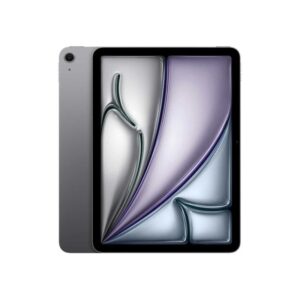
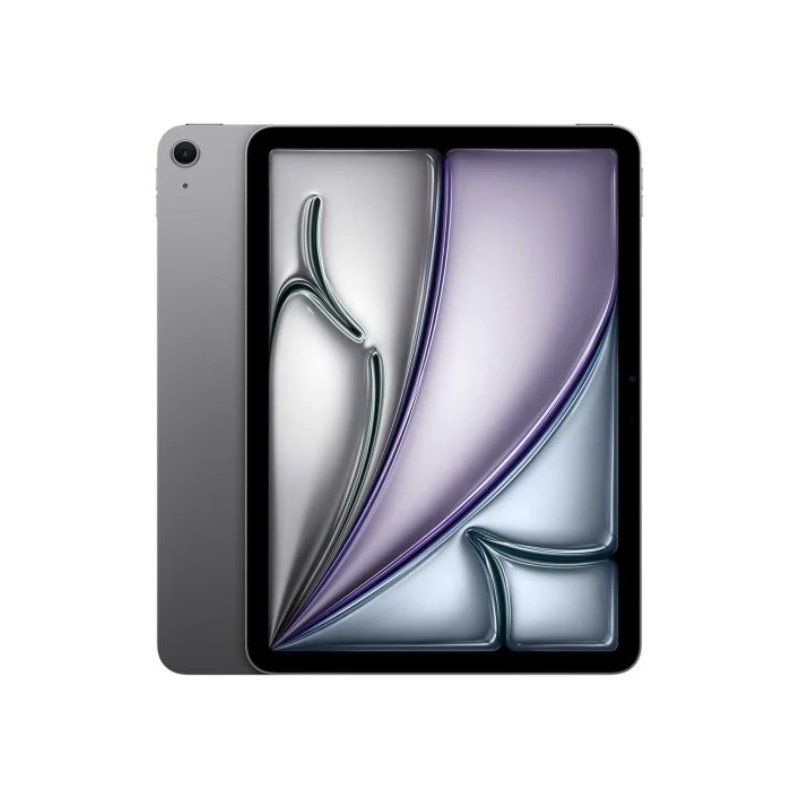
Apple iPad Air 11-inch M3 in Kenya
The Fast Gadgets Verdict
Apple iPad Air 11 M3 (2025) Price in Kenya is Ksh78000. The Air M3 sits at the point where display size, chip performance, software support, build quality, and price converge into the most complete everyday tablet Apple makes. At KSh 78,000 for the 128GB Wi-Fi variant it is the most accessible current-generation iPad Air in Kenya.
The honest limitations: the display is a Liquid Retina IPS LCD — excellent but not OLED, which means the iPad Pro 11 M4’s Tandem OLED delivers visibly superior contrast and black levels. There is no Face ID — fingerprint is top-mounted. No headphone jack. And all storage variants carry 8GB RAM rather than the 16GB available on the higher-tier iPad Pro.
Our rating — 9.5/10 for all-round everyday value. 8/10 for display technology relative to the Pro.
Right for You?
If you want an 11-inch Apple tablet that handles everything from university coursework to professional productivity to creative work to streaming — with a current M3 chip, Apple Pencil 2 support, Wi-Fi 6E, and long iPadOS software support — without paying iPad Pro prices, the Air 11 M3 is the answer. It is the right tablet for students who need genuine computing power, professionals who want a portable work machine for meetings and travel, and creators who illustrate, edit photos, or produce content without requiring ProRes video or Thunderbolt 3. If you already own an iPad Air 5 M1 and it is working well, the upgrade case is real but not urgent — the M3 is faster and the chip is newer, but the day-to-day experience gap is narrower than the marketing suggests. If you are buying your first iPad Air, buy the M3 without hesitation.
Apple iPad Air 11-inch M3 Full Specifications
Network
| Feature | Specification |
|---|---|
| Technology | GSM / HSPA / LTE / 5G (cellular model) |
| SIM | eSIM only (cellular model) |
| Wi-Fi Only Model | Available without cellular |
| GPS | 5G cellular model only |
| Models | A3266 (Wi-Fi), A3267 / A3270 (Wi-Fi + Cellular, Global) |
Launch
| Feature | Specification |
|---|---|
| Announced | 2025, March 4 |
| Released | 2025, March 12 |
| Status | Available in Kenya |
Body
| Feature | Specification |
|---|---|
| Dimensions | 247.6 x 178.5 x 6.1 mm |
| Weight | 460g |
| Build | Glass front, aluminium back, aluminium frame |
| SIM | eSIM (cellular model only) |
| Stylus | Apple Pencil 2nd generation support |
Display
| Feature | Specification |
|---|---|
| Type | Liquid Retina IPS LCD |
| Size | 11.0 inches |
| Resolution | 1640 x 2360 pixels, 264 ppi |
| Brightness | 500 nits typical |
| Protection | Scratch-resistant glass, oleophobic coating, Mohs level 4 |
Platform
| Feature | Specification |
|---|---|
| Operating System | iPadOS 18.3.2 at launch, upgradeable to iPadOS 26.4 |
| Chipset | Apple M3 |
| CPU | Octa-core (4 performance cores + 4 efficiency cores) |
| GPU | Apple GPU, 9-core graphics |
Memory and Storage
| Feature | Specification |
|---|---|
| RAM | 8GB across all variants |
| Storage Options | 128GB / 256GB / 512GB / 1TB |
| Card Slot | Not supported |
Main Camera
| Feature | Specification |
|---|---|
| Rear Camera | 12MP, f/1.8, 1/3.0″, 1.22µm, dual pixel PDAF |
| Video | 4K@24/25/30/60fps, 1080p@25/30/60/120/240fps, gyro-EIS |
| Features | HDR |
Front Camera
| Feature | Specification |
|---|---|
| Front Camera | 12MP, f/2.0, 122° ultrawide |
| Video | 1080p@25/30/60fps, gyro-EIS |
| Features | HDR, Centre Stage auto-framing |
Audio
| Feature | Specification |
|---|---|
| Loudspeaker | Yes, stereo speakers |
| 3.5mm Jack | No |
Connectivity
| Feature | Specification |
|---|---|
| Wi-Fi | 802.11 a/b/g/n/ac/6e, dual-band, hotspot |
| Bluetooth | 5.3, A2DP, LE |
| GPS | 5G model only — GPS, GLONASS |
| NFC | No |
| Radio | No |
| USB | Type-C 3.1 Gen2, DisplayPort, magnetic connector |
Sensors and Security
| Feature | Specification |
|---|---|
| Fingerprint | Top-mounted Touch ID |
| Sensors | Accelerometer, gyro, compass, barometer |
Battery
| Feature | Specification |
|---|---|
| Capacity | 7,606mAh (28.93Wh) |
| Charging | Wired USB-C |
| Endurance Rating | 62 hours (GSMArena lab test) |
| Battery Cycles | 1,000 cycles rated |
Colors
| Feature | Specification |
|---|---|
| Available Colors | Space Gray, Starlight, Purple, Blue |
Price in Kenya
| Variant | Price |
|---|---|
| 128GB Wi-Fi | KSh 78,000 |
| 256GB Wi-Fi + 5G | KSh 121,000 |
Apple iPad Air 11 M3: The Display in Real Life
The 11-inch Liquid Retina display at 264 PPI is the same physical panel size as the iPad Pro 11 M4 — you get every millimetre of the same 11-inch working canvas, the same aspect ratio, and the same resolution. Where they differ is the display technology underneath: the Air M3 uses IPS LCD while the Pro uses Tandem OLED. For most everyday use — document work, web browsing, note-taking, streaming, and photo viewing — the Air M3’s display is excellent and the difference from the Pro’s OLED is not prominent in normal ambient lighting.
The distinction becomes visible in two specific scenarios. The first is dark room video viewing, where OLED’s true black levels produce deeper shadows and richer contrast than the Air’s LCD backlight can replicate. The second is HDR content with bright highlights, where the Pro’s 1,600 nit peak output makes specular highlights genuinely pop in a way the Air’s 500 nit panel cannot approach. For the vast majority of daily use outside these scenarios, the Air M3’s display is sharp, colour-accurate, comfortable, and more than sufficient.
The wide colour P3 gamut, True Tone ambient adjustment, oleophobic coating, and fully laminated construction are all present on the Air M3 — these are not compromised away to hit the price point. The display feels premium to use, and the 11-inch size gives you enough working space to read documents at comfortable scale, split-screen two apps meaningfully, and view content without feeling constrained.
What the Cameras Actually Do
The 12MP rear camera with f/1.8 aperture and dual pixel PDAF is identical to the iPad Air 5 M1’s rear camera in specification — Apple has not changed the rear camera hardware between the M1 and M3 Air generations, which reflects that tablet cameras are utility tools rather than the primary reason anyone buys an iPad. Document scanning is sharp and accurate, whiteboard capture is clean and well-exposed, and 4K video at 60fps with gyro-EIS stabilisation is capable for lecture recording, event documentation, and basic content creation from a fixed position.
The front camera is where the M3 Air improves over the M1 Air. At f/2.0 versus the M1’s f/2.4, the M3’s front camera aperture is wider — gathering more light and producing better low-light performance for video calls, online classes, and content from the front-facing lens. The 12MP resolution and Centre Stage auto-framing carry over from the M1, keeping you centred in the frame as you move during calls without requiring manual adjustment.
The landscape-orientated front camera position — on the long edge of the iPad rather than the short edge — means video calls in landscape orientation frame you naturally with the camera at the top of the screen rather than to the side. For professional video calls and online meetings, this positioning produces more natural eye contact and a more polished framing than the side-mounted camera on older iPad designs.
Apple iPad Air 11: How the M3 Chip Performs
The Apple M3 on 3nm sits between the M1 in the iPad Air 5 and the M4 in the iPad Pro 11 in the chip generation sequence. In everyday tablet tasks — document editing, web browsing, photo editing, streaming, note-taking with Apple Pencil, and video calls — the M3 delivers performance that is meaningfully faster than the M1 and effectively indistinguishable from the M4 for anything short of the most demanding professional workloads.
The 9-core GPU — one core more than the M1’s 8-core — handles graphics-intensive apps and games with smooth, consistent performance. Every current iPad-optimised game runs at maximum visual settings. Procreate handles large canvas sizes with many layers without slowdown. Photo editing in Lightroom and Darkroom processes RAW files quickly. Stage Manager for multi-window multitasking runs fluidly across the full 11-inch display.
Apple Intelligence — Apple’s on-device AI system — runs natively on the M3, enabling writing assistance, image generation, smart reply suggestions, and system-level AI features without sending data to a remote server. The M3’s Neural Engine handles these workloads efficiently in the background without affecting foreground performance. For Kenyan users who use AI writing tools, smart photo organisation, and productivity AI features, these capabilities work fully on-device.
Wi-Fi 6E support — an upgrade from the M1 Air’s Wi-Fi 6 — enables connectivity on the 6GHz band where available, providing faster wireless speeds and less congestion in environments with many competing devices. In university libraries, open offices, and shared living spaces where Wi-Fi congestion is common, Wi-Fi 6E delivers more reliable high-speed connectivity than the older standard.
iPadOS 26.4 is the current version. The iPad Air M3 launched on iPadOS 18 in March 2025 and has already received several major updates. Apple’s support for iPad Air models typically extends six to seven years, meaning this iPad will likely receive major updates until approximately 2031–2032.
Battery Life and Everyday Endurance
The 7,606mAh battery — essentially the same capacity as the iPad Air 5’s 7,600mAh — delivers Apple’s claimed 10 hours of typical use reliably across mixed productivity and media tasks. GSMArena’s standardised lab testing produced a 62-hour endurance score. For a student working through a full university day of lectures, note-taking, research, and casual streaming, a morning charge comfortably covers the day without anxiety.
The USB-C 3.1 Gen2 with DisplayPort support enables the same external display and Thunderbolt-adjacent connectivity as the iPad Air 5 — connecting to a 4K monitor, projector, or USB-C hub expands the iPad Air M3 into a more capable desktop setup. The magnetic connector is compatible with the Magic Keyboard for iPad Air, which adds a physical keyboard, trackpad, and additional USB-C pass-through charging port for desk and travel productivity work.
Apple iPad Air 11 vs iPad Air 5 M1 — Is the Upgrade Worth KSh 4,000 More?
At KSh 78,000 for the M3 versus KSh 82,000 for the M1 Air — the M3 is actually KSh 4,000 cheaper at the base variant while being a newer and more capable device. This makes the comparison straightforward for new buyers, but worth examining for existing M1 owners considering an upgrade.
| Feature | iPad Air 11 M3 (2025) | iPad Air 5 M1 (2022) |
|---|---|---|
| Price in Kenya | From KSh 78,000 | From KSh 82,000 |
| Chip | Apple M3, 3nm | Apple M1, 5nm |
| CPU | 4+4 core, M3 | 4+4 core, M1 |
| GPU | 9-core | 8-core |
| Display | 11″ Liquid Retina, 264 ppi | 10.9″ Liquid Retina, 264 ppi |
| Front Camera | 12MP, f/2.0 | 12MP, f/2.4 |
| Wi-Fi | Wi-Fi 6E | Wi-Fi 6 |
| Bluetooth | 5.3 | 5.0 |
| Base Storage | 128GB | 64GB |
| Max Storage | 1TB | 256GB |
| Apple Intelligence | Yes | No |
| iPadOS Launch | iPadOS 18 (2025) | iPadOS 15 (2022) |
| Estimated Support Until | ~2031–2032 | ~2028–2029 |
| Colors | Space Gray, Starlight, Purple, Blue | Space Gray, Starlight, Pink, Purple, Blue |
Our pick: For new buyers the answer is simple — the iPad Air M3 at KSh 78,000 is KSh 4,000 cheaper than the M1 Air, starts at 128GB instead of 64GB, has a newer chip, better front camera, Wi-Fi 6E, Apple Intelligence, and three additional years of expected software support. Buy the M3. For existing M1 owners whose tablet still performs well for their needs, the upgrade from M1 to M3 is not urgent — the day-to-day performance gap in everyday tasks is narrower than two chip generations might suggest. If your M1 Air’s battery health has degraded significantly, if you find yourself wanting more than 256GB storage, or if Apple Intelligence features are important to your workflow, those are the practical triggers to upgrade.
Buy It If / Skip It If
| Buy it if | Skip it if |
|---|---|
| You want a current-generation iPad Air at the lowest Kenya price | You need Tandem OLED display quality — get the iPad Pro 11 M4 |
| 11 inches of working space suits your productivity needs | You want the most portable iPad — get the iPad Mini 7 |
| Apple Pencil 2 note-taking and illustration are part of your workflow | You need ProRes video or Thunderbolt 3 — those are Pro features |
| Long software support until ~2032 matters to your decision | You already own a well-functioning iPad Air M1 or M2 |
| Apple Intelligence AI features are relevant to your daily use | Your budget requires the most affordable Apple tablet — consider iPad 10 |
Questions Kenyans Are Asking About the Apple iPad Air 11-inch M3
What is the Apple iPad Air 11 M3 price in Kenya? The Apple iPad Air 11-inch M3 price in Kenya starts at KSh 78,000 for the 128GB Wi-Fi variant at Fast Gadgets Kenya. The 256GB Wi-Fi + 5G cellular model is KSh 121,000. Other storage variants are available — confirm exact pricing with Fast Gadgets Kenya directly.
Je, iPad Air M3 ni bora kuliko iPad Air M1 Kenya? Ndiyo. iPad Air M3 ina chip mpya zaidi ya M3, kamera ya mbele bora (f/2.0 badala ya f/2.4), Wi-Fi 6E, Apple Intelligence, na msaada wa iPadOS hadi 2031–2032. Pia inaanza kwa 128GB badala ya 64GB. Kwa KSh 78,000 — bei nafuu zaidi kuliko M1 ya KSh 82,000 — M3 ni chaguo bora zaidi kwa wanunuzi wapya.
What is the difference between iPad Air M3 Wi-Fi and 5G variants in Kenya? The 128GB Wi-Fi variant at KSh 78,000 connects to the internet only through Wi-Fi and does not include GPS. The 256GB Wi-Fi + 5G variant at KSh 121,000 adds 5G cellular connectivity for internet access anywhere with network coverage, GPS navigation, and uses eSIM. The KSh 43,000 price gap also reflects the storage difference — 128GB versus 256GB — so the effective cellular premium alone is somewhat lower than it appears.
Does the iPad Air M3 support Apple Pencil? Yes. The iPad Air 11 M3 supports the Apple Pencil 2nd generation, which attaches magnetically to the side and charges wirelessly. The Apple Pencil Pro is also compatible with the M3 Air, adding squeeze gesture, barrel roll, and haptic feedback for more expressive creative use.
How long will Apple support the iPad Air M3 with software updates? The iPad Air M3 launched in March 2025 on iPadOS 18 and has already been updated to iPadOS 26. Apple typically supports iPad Air models for six to seven years of major updates, meaning the M3 Air is likely to receive updates until approximately 2031–2032.
Bei ya iPad Air 11 M3 Kenya ni ngapi? Bei ya iPad Air 11 M3 Kenya inaanzia KSh 78,000 kwa variant ya 128GB Wi-Fi, na KSh 121,000 kwa variant ya 256GB na 5G cellular, kutoka Fast Gadgets Kenya.
Is the iPad Air M3 good enough for university students in Kenya? Yes — it is one of the best tablet options for university students in Kenya. The M3 chip handles all academic software smoothly, the 11-inch display gives comfortable working space for documents and research, Apple Pencil 2 support enables natural note-taking and annotation, and the expected software support until 2031–2032 means the tablet will remain current throughout a four-year degree and beyond.
Does the iPad Air 11 M3 have Face ID? No. The iPad Air 11 M3 uses top-mounted Touch ID fingerprint authentication rather than Face ID. Face ID is exclusive to the iPad Pro lineup. Touch ID on the Air M3 is fast, reliable, and works with wet or gloved fingers on the physical button.
Where can I buy the Apple iPad Air 11-inch M3 in Kenya? You can buy the Apple iPad Air 11-inch M3 from Fast Gadgets Kenya, with M-Pesa payment accepted and countrywide delivery available across Kenya.
Explore the latest Apple iPads and accessories at Fast Gadgets Kenya.


Reviews
There are no reviews yet.